

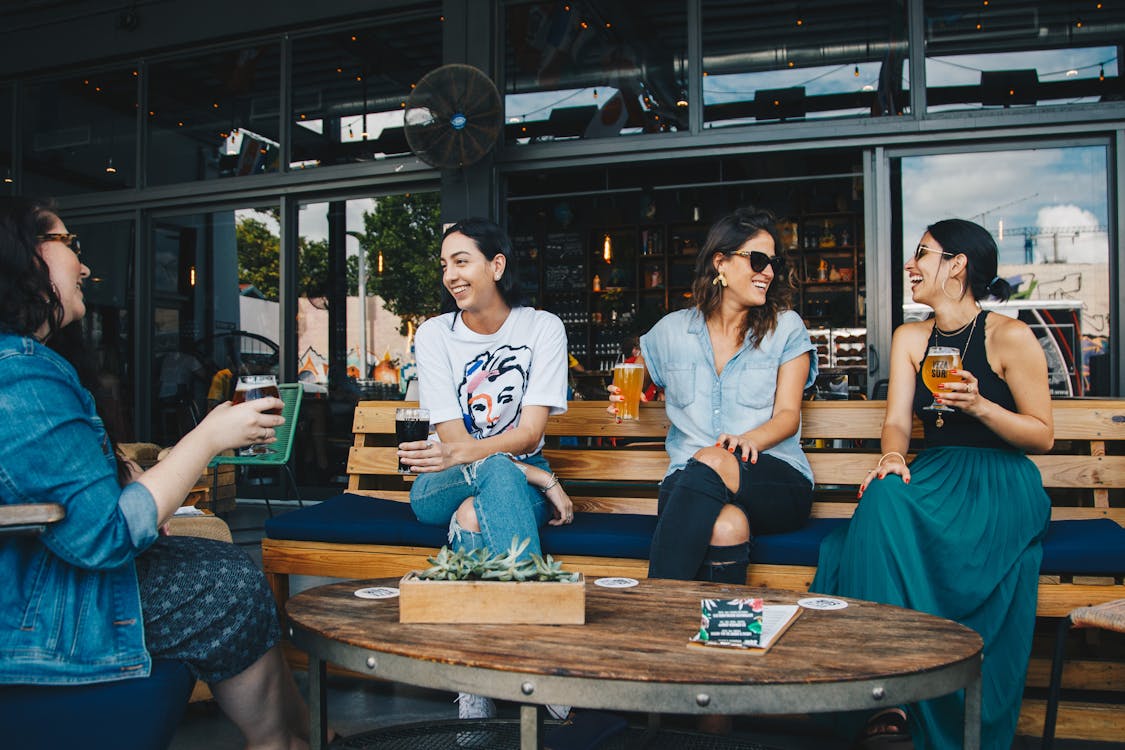
America is drinking less. According to Gallup's long-running national survey on alcohol consumption — a poll that has tracked American drinking habits since 1939 — the percentage of Americans who say they drink has fallen to 54%.[1][1] Gallup, Inc. “U.S. Drinking Rate at New Low as Alcohol Concerns Surge.” The shift is most pronounced among younger adults and reflects a broader cultural reckoning with alcohol's health effects, social costs, and place in modern life.
For the LGBTQ+ community, this national trend arrives with particular weight. Alcohol has played a unique role in queer life for more than a century — not merely as a social lubricant but as an infrastructure of belonging, resistance, and survival. As the country reconsiders its relationship with drinking, queer Americans are grappling with a version of that question shaped by history and stakes that are distinctly their own.
Data on LGBTQ+ people and alcohol
The research on alcohol and the LGBTQ+ community is consistent and striking. Sexual minority adults are 1.5 to three times as likely as heterosexuals to meet the clinical criteria for an alcohol use disorder. A study published in PMC examining alcohol use across the adult life course found that among gay and bisexual men, alcohol use disorder prevalence reached as high as 55% at age 25 — one of the highest rates recorded for any demographic group. Bisexual women show some of the highest rates of heavy drinking overall, with roughly 25% reporting heavy alcohol use across multiple studies.
The Institute of Alcohol Studies has documented that LGBTQ+ people are significantly more likely than their straight peers to drink to cope with emotional distress, and more likely to experience negative consequences — financial, relational, and physical — from their drinking.
The most widely accepted explanation for these patterns is minority stress theory: the idea that members of stigmatized social groups experience chronic, elevated stress from discrimination, identity concealment, and the cumulative burden of navigating a society that does not fully accept them. For many LGBTQ+ people, alcohol has been a way to manage that stress, lower inhibitions in social settings, or simply get through particularly hard stretches of life. That's not a moral failing. It's a predictable response to structural pressure.
The gay bar as "third place"
Understanding alcohol in queer life requires understanding the gay bar — not as a place of vice, but as something far more necessary than that. For most of the 20th century, gay bars were among the only spaces where LGBTQ+ people could be openly themselves without risking arrest, violence, or public humiliation. They were community centers, political organizing hubs, and refuges from a world that criminalized queer identity in law and culture alike.
The most iconic example is the Stonewall Inn in Greenwich Village, a bar whose patrons sparked the Stonewall Uprising of 1969 — the event most historians identify as the catalyst for the modern LGBTQ+ rights movement. That the spark for that movement came from a bar is not coincidental. Bars were where the community gathered, because often they were the only establishments willing to serve queer people openly.
This history embedded alcohol into queer culture at a deep level. Milestones were celebrated at bars. Grief was processed there. Dates were arranged there, political campaigns were organized there, and chosen families were built there. The cultural patterns that emerged from that era didn't simply disappear when the laws changed.
How gay bar culture is shifting
Gay bar culture is itself in transition. The number of gay bars in the United States declined substantially through the 2010s as dating apps moved queer socializing online, commercial rents climbed, and the pandemic shattered the hospitality industry. Some recovery and new openings have followed, but the gay bar no longer holds the singular position it once did as the primary hub of queer community life.
Simultaneously, the sober-curious movement — a cultural shift toward intentional drinking reduction or abstinence — has found real traction among younger LGBTQ+ people. Sober queer social groups, alcohol-free events, and dry brunches have grown in cities with large queer populations. Many gay bars have expanded their non-alcoholic menus in response to changing patron preferences, moving closer to being social venues that happen to serve alcohol rather than establishments where drinking is the point.
It costs money, too
There's a financial angle to this conversation that often goes unexamined. Regular alcohol consumption — at bars, restaurants, and at home — is a meaningful household expense that many people underestimate. Social drinkers can easily spend several hundred dollars per month on alcohol when accounting for drinks out, bottles at home, and the standard markups at bars and restaurants. Over a year, that can add up to thousands of dollars.
For LGBTQ+ people navigating documented economic inequalities — including higher rates of mortgage rejection, lower rates of homeownership, and various wage gaps — intentional spending matters. Reducing alcohol consumption is one of the more tangible ways to free up money for savings, debt paydown, or investment. This isn't an argument against supporting queer-owned bars, which deserve patronage as community institutions and small businesses. But reflexive drinking, separate from intentional social spending, is worth examining.
The takeaway
The youngest generation of LGBTQ+ adults — the most openly queer generation on record, with roughly one in five Gen Z adults identifying as LGBTQ+ according to Gallup research — is also the generation most skeptical of alcohol as a default social activity. Whether they balance the inherited traditions of gay bar culture with their own evolving relationship to drinking will shape what queer community looks and feels like in the decades ahead.
The gay bar is a cultural inheritance, a political symbol, and for many people a lifeline — all in one. Asking hard questions about alcohol doesn't diminish any of that. If anything, it reflects a community healthy enough to examine its own habits and make more intentional choices about how it lives and who it chooses to be.