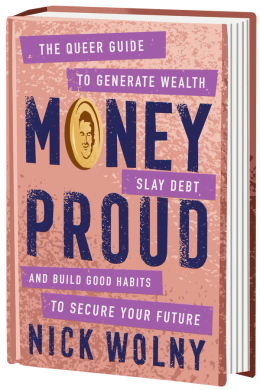



For just over a year, I was the senior editor who launched and ran the financial-independence vertical at NextAdvisor, in partnership with TIME. We published about 125 articles about FIRE on TIME.com in that time period. What follows is the distilled version of that coverage.
From wild side hustles to frugality enthusiasts, the people I met and interviewed during this editor job helped me realize that the financial independence movement isn’t all get-rich-quick maniacs. It’s a perspective that rejects the default destiny of a lifetime of soul-sucking work, from people who've decided to do something about it and reclaim the time they have left on this planet.
When you have a clear roadmap to financial independence, your anxieties about the future calm down a bit, and this in turn enriches your life in the present. Here's a rundown on FIRE for newbies and enthusiasts alike who want to review the basics.
What is the FIRE movement?
For every strict FIRE adherent I met, there was someone else in the movement who had bent or broken many of its rules to fit their own lifestyle goals. Many people don’t want to retire at all; they want to do meaningful work on their time and their terms.
The Financial Independence, Retire Early (FIRE movement) encompasses any effort in which you're trying to save enough money to become work-optional. In my book Money Proud, I distill the ethos of financial independence down to seven words: Lower expenses, increase earnings, invest the difference.
FIRE in 4 steps (summary)
- Calculate how much money you need in invested money to live mostly/entirely off annual gains alone.
- Determine how much you need to save and invest each month to reach this goal, based on how soon you want to stop working or producing income.
- Hit your monthly investing target by increasing your monthly income and/or decreasing your monthly expenses, then investing the difference.
- Adjust your goals as you go to ensure they inspire and challenge you, but don’t burn you out in the short term.
Where did the FIRE movement come from?
In 1998, Trinity University researchers Philip L. Cooley, Carl M. Hubbard, and Daniel T. Walz published the results of a study on retirement savings.
Their projections found that, if an investor had a certain multiple of their income saved up and withdrew 4% or less of their nest egg each year, their chances of depleting their savings in a 30-year period were zero. Their research was based on rates of return since the invention of the 401(k) and other tax-advantaged retirement accounts, and later came referred to as the Trinity study.
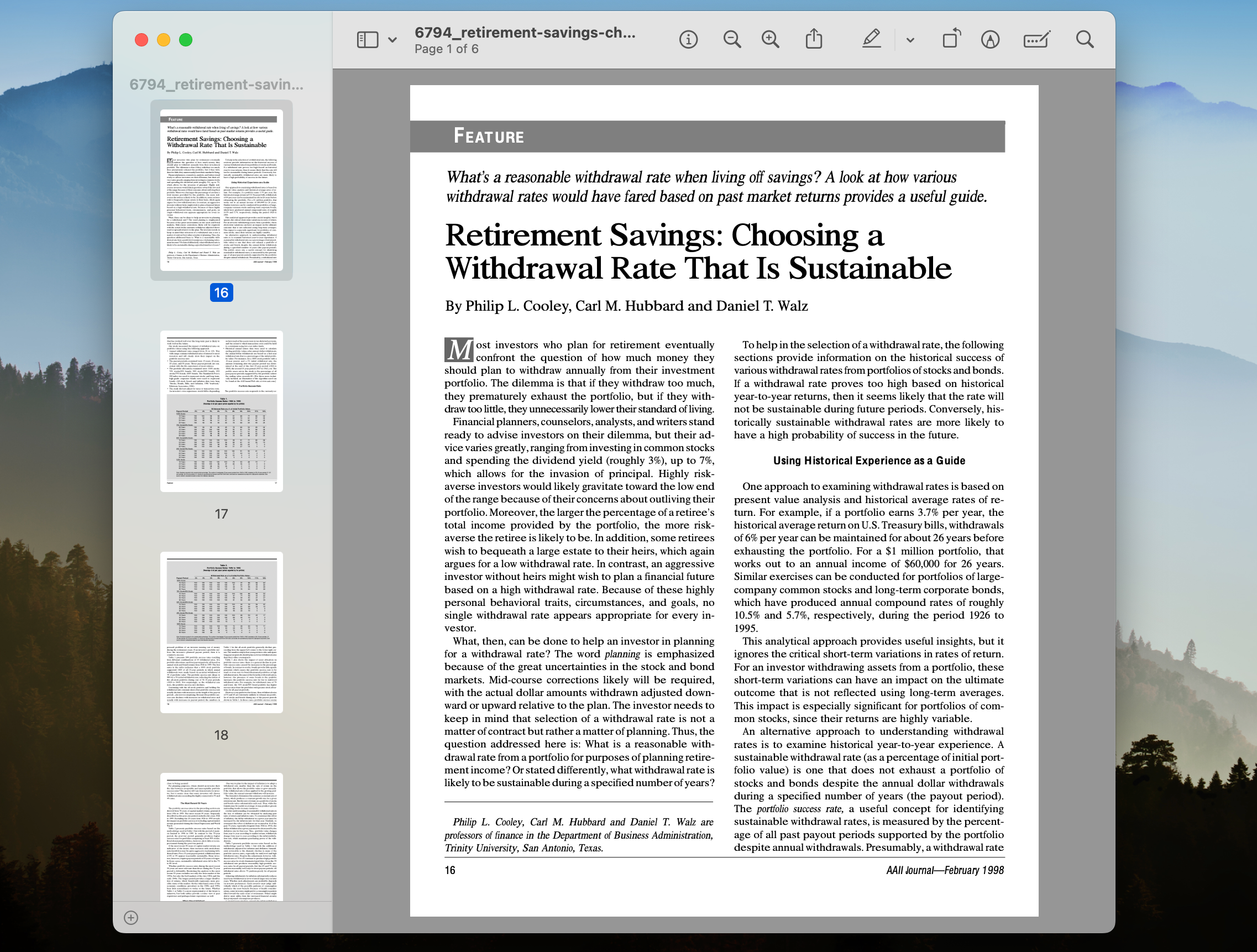
This “safe withdrawal rate” of 4 percent came to be known as the 4 percent rule.
The Trinity Study corroborated a column from financial planner William Bengen entitled “Determining Withdrawal Rates Using Historical Data” that published in the October 1994 issue of the Journal of Financial Planning. It also projected a safe withdrawal rate of 4 percent.
This research led to a reframe: If you could grow your nest egg large enough that the interest alone covered annual expenses and other medical expenses, most or even all of your principal would be protected, preserving your wealth.
The 4 percent rule:An initial projection of “safe withdrawal rate,” e.g. the amount you could withdraw from retirement funds each year and still have your retirement last 30 years.
Why age doesn't define retirement
They say money doesn't grow on trees, but if your tree is a large-enough nest egg, well, it actually does. 🌳
People began to realize that traditional retirement age wasn’t dictated by age, but whether you reach financial independence. Thus, the FIRE lifestyle was born.
FIRE stands for Financial Independence, Retire Early. Over the years, however, many FIRE followers began to break from core FIRE principles and define FIRE variations that better suit their lifestyle goals.
Most FIRE enthusiasts aim to retire early, often in their 30s or 40s, by aggressively saving and investing as much money from their disposable income as they can. They max out contribution limits as part of their investing strategies, and may take on an additional part-time job or side hustle to reach their goals faster.
Key Idea:The pursuit of FIRE can instill good financial habits, even if you don’t actually want to retire early. As such, some FIRE participants cut the part about retiring early and just focus on financial security.
How to reach FIRE, step by step
No. 1: Calculate your estimated FIRE number
To reach financial security, you first have to figure out how much money you’ll need to consider yourself financially independent. One way to approximate this number is with the 4 percent rule. To calculate this, divide your anticipated annual expenses in retirement (or non-working lifestyle) by 0.04 (4%).
Another way to put this is to multiply anticipated annual expenses by 25.
Annual expenses x 25 = FIRE number (estimate)
(Ready to tinker? Calculate your FIRE number here.)
It should be stated that this estimate is very rough and not entirely accurate.
- There will be inflation.
- If you’re in the US, there is Social Security.
- Some people will have pensions and royalties.
- Others will have unexpected medical debt or other financial setbacks.
- Did I mention inflation? Ah, I did.
The 4 percent rule accounts for inflation (real returns vs. nominal returns).
In an October 1994 article for the Journal of Financial Planning, author Bill Bengen noted that inflation rates and withdrawals are never consistent, making this planning process more complex.
Remember that financial independence is a higher and more aggressive benchmark than plain-old retirement. You’re playing to reach a point of wealth at which dividends, investment withdrawals, and business owner draws can fully fund your lifestyle.
Lastly, it’s hard to predict where you’ll be in 20 or 30 or 40 years and how much your life will cost by then. But this number at least gets us started.
No. 2: Reverse-engineer your savings plan
Now we have to figure out how you’ll get to that number. You could just do some flat division, but remember that money you have saved in your bank account will grow and compound if you have it invested.
There are several free calculators online that will help you tinker with these concepts. Here is a simpler one from MoneyUnder30, and here is a more advanced one from WalletBurst.
No. 3: Close the gap
To completely retire earlier than planned, you’ll almost certainly need to be saving thousands of dollars per month. You might already be doing this, but most people are not, and aren’t building enough wealth to ever reach their FIRE number.
The easiest way to close this gap is to go make more money. This could come in the form of online business efforts, side hustles, affiliate income, or many other streams. There is something for everyone.
You’ll also want to shore up your budgeting. Some Lean FIRE adherents will budget as tightly as possible to save money, but the tradeoffs might not be worth it for you. Nevertheless, it’s important to improve your financial education and spending habits so you don’t go off and blow all this extra money you’ve just worked so hard to make.
What savings rate do you need for FIRE?
Most FIRE paths assume a savings rate of 50–70% of income. The higher your rate, the sooner you hit your number. Your exact rate falls out of your FIRE number and how many years you give it to compound.
Pros and cons of the FIRE movement
The case for FIRE:
- It forces financial literacy and a high savings rate, things that will benefit you even if you never fully retire.
- It buys optionality — the freedom to downshift, switch careers, or weather a job loss.
- The core habit (lower expenses, increase earnings, invest the difference) is good advice for anyone.
Is FIRE even feasible for most people?
One of the main criticisms to FIRE is the high savings rate required to achieve financial independence. Saving 50%+ is out of reach for many, especially with high expenses or debt; a six-figure household income is often essential. One Bankrate report found that 68% of Americans couldn't last a month without income.
Is early retirement actually fulfilling?
Sure, the time off sounds great. But what about living a life of purpose? Critics argue that some categories of work provide purpose, social connection, and contributions beyond money.
Is the short-term sacrifice worth it?
Aggressive saving can diminish present quality of life and strain relationships. A balance between enjoying now and building for later is often more sustainable.
Is FIRE right for you?
If you’re trying to make money online, increase your income, or design a certain lifestyle, you’re already a part of the FI movement.
Decide how you want to live in the future, then start taking action today to bring those plans to fruition, one dollar at a time. ◆
FIRE FAQs
What does FIRE stand for in personal finance?+
FIRE stands for Financial Independence, Retire Early, a wealth benchmark at which you become work-optional.
What is the 4 percent rule for retirement?+
The 4 percent rule says an annual withdrawal of 4 percent, adjusted for inflation, is a safe withdrawal rate for a 30-year retirement.
How much do you need to retire FIRE?+
A first benchmark is 25× your annual expenses. For many Americans, that's roughly $1M–$2.5M in invested assets.
Can you FIRE on a normal income?+
Yes, but slower. The math works at any income — the lever is your savings rate, not your salary. Variations like Coast FIRE and Barista FIRE make it realistic for moderate earners.