
Buy now pay Later is very DL
Also: Your replies, hot links, new book interview, and more
Happy Sunday, Nick here!
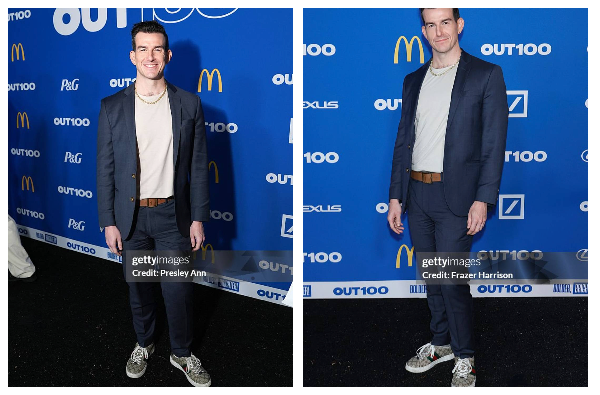
I popped up to Hollywood Friday night to attend the Out100 reception. Still have no idea how to pose on a step-and-repeat, but getting better! The theme was "dress to express"; I just wore stuff I already owned and it was nbd.
It was fun to connect with some fellow reporters and people from a variety of industries, and ya boy was back home and in bed before 11pm -- success.
I also added a responses section replying back to some of your comments and emails. I read the survey results at the bottom of each email -- drop me a line! Or reply and say hello. Once I dig past all the AI-generated pitches in my inbox these days (😭), I promise I'll get back to you.
If you enjoy today's email, consider forwarding it to a friend. To share on social, the web link is here.
And if someone forwarded this email to you, you can sign up for free by clicking here.
—Nick

Buy now pay Later is very DL
Buy Now Pay Later is very DL (For my allies, that’s “down-low,” just so we’re all on the same page with the slang).
I think this is true for payment plans in general. Debt can be leverage, which is important for growth. But sometimes financing just enables both consumers and business owners to be messy with their money, and then they’re ashamed of the mess, so they keep quiet about it, and it turns into a mindfuck.
Back when I was self-employed full-time, payment plans were a holy grail for revenue. I saw businesses offering long-ass payment plans on flagship programs and courses. (For example, the Institute for Integrative Nutrition offers a 36-month payment plan on a $6k nutrition certification.)
I remember my main client in 2019, a PR agency for entrepreneurs, pushing event attendees to “invest in themselves,” even if it meant dipping into their 401(k)s to pay for a mastermind that was probably too advanced for where they were at in their business journey.
Also, on the owner side, when you offer financing, you sometimes deal with clients dropping out of their retainers or ghosting on payment plans. So then you get to wear yet another hat, debt collector, on top of all the other ones you’re wearing as an entrepreneur. I found it draining.
We put ourselves through all this because payment plans lead to people spending more money. This works in B2B, and it certainly works in B2C (gestures to American consumers’ massive debt burdens).
Cut to BNPL (musical flourish)
Which is fresh on my mind after reading a nice commentary this week from Techcrunch Editor-In-Chief Connie Loizos about the state of the industry.
When BNPLs were new, creators were doing sponsored content about them left and right. The drag queens were the best at it, obviously, they’re incredible entertainers and spokespeople (hire them, pay them, protect them!), so many of these ads were fucking hilarious. The Klarna episode of Unhhhh, Trixie and Katya’s iconic web series, is absolutely one of their funniest episodes.
This seemed innocent enough. And BNPL having easier points of entry can be helpful for young people, who haven’t had enough time to build up a credit score.
The problem is that we can’t tell how much people are relying on BNPL because the reporting is less regulated. For other types of debt, economists have the Household Debt and Credit Report, which shows not only amounts owed for various types of debts, but also delinquency rates, whether people are struggling to pay back their debts. The changes in those numbers help us understand how Americans are doing with their money.
BNPL doesn’t have any of that. So we can’t see it. Our snapshot comes from private surveys instead.
- Bloomberg last year, along with calling BNPL “phantom debt,” did a Harris poll and found that “43% of those who owe money to BNPL services said they were behind on payments, while 28% said they were delinquent on other debt because of spending on the platforms.”
- A quarter of BNPL users have financed their groceries at least once in the last year, according to LendingTree.
- More recently, the BNPLs have gone beyond just offering four payments over six weeks interest-free. Many of them now offer loans or even credit cards, which have interest rates of up to 37 percent.
The BNPLs have long resisted sharing payment data with credit bureaus or FICO. Here’s Afterpay saying with their whole chest that they’re not gonna share anything until it’s been decided that payment history, such as on-time payments, will help credit scores and not just hurt scores. This makes lenders mad because they can’t see how much people have out in BNPL loans, and sometimes the balances are in the thousands.
FICO announced this summer they’d be incorporating BNPL usage data. In a yearlong trial with Affirm, on-time payments affected credit scores by less than 10 points for 85 percent of the participants.
Commentary
The option to finance your next burrito feels inherently dystopian. And the BNPL providers’ yearslong visibility campaign has done its job, even if it’s still fodder for publication rage bait (see an example from The Wall Street Journal here and another from NYT magazine here).
For young people, BNPL seems normalized, like a credit card. It’s one of those money topics where I notice generational divide; when I gripe about it on social media, I get more pushback than expected.
But knowing how queer people are with other areas of personal finance, I think more of us have messy money as a result of BNPL than we’re letting on. Some of that is self-inflicted from overspending, and some of it is the result of us not having enough cash flow to make ends meet, being in that lower leg of the K-shaped economy, a shitty job market, higher prices... the list goes on.
I’d argue that this is also true in the online business/creator space. Instead of stuff, or “being fabulous,” the positioning is investing in yourself, which is trickier because you often do have to invest in yourself to make it online.
Both categories of people potentially lean into financing to scratch some emotional itch that may or may not be real.
As a wise yoga friend of mine likes to say: sometimes, feelings lie.
I’m not saying to never use BNPL or other types of fast-cash financing. But if you are going to use them, you need to have a plan for your payments and know what money is going where and when. It’s important for us to be good with our money, especially these next two weeks as Black Friday deals obliterate our inboxes.
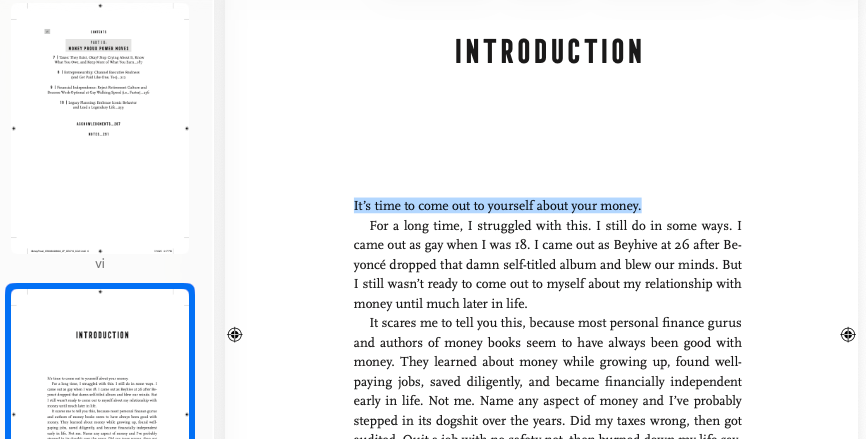
My forthcoming book Money Proud talks about this, about how you have to first come out to yourself about your financial situation before you can change anything. That’s literally the first sentence of the book: “It’s time to come out to yourself about your money.” Then it goes into strategies for making more, saving more, and balancing current spending with securing your future.
Make clear plans for how you pay for things so that you can spend less time stressing out and more time focusing on what matters. ⬥

What you said
These are email and survey responses from last week.
-
"Welcome back! Thanks for committing to humans over bots, and thanks for sharing your current journey in deciding what kind of human you want to be. Good luck with the book. Do you think it would be useful for a mature and entrepreneurial queer teen, or is it really geared just to adults?”
Money Proud can definitely be for teens! This is a voice-y 101 book. People who already have a grip on finance will enjoy reinforcing the basics. People new to the nuts and bolts of personal finance will enjoy the digestible approach. (Chapter 8 is an intro to the basics of entrepreneurship and what I think matters most when you start or restart.)
-
“P.S. Big grin when reading about your need to move to a grittier place with "frugal energy" -- This rural Midwesterner loves the working class Portland neighborhood she ended up in -- a neighborly, DIY and activist spirit, with people living more connected to our shared humanity and survival.”
I also just think people are nicer. People have less, but are happier. More of an attitude of gratitude, it seems. Feels like we've lost that over the years both from the pandemic and political polarization.
-
“Fascinating & terrifying stuff about AI. I'm constantly fighting with Gmail to stop correcting my verb forms. As a pro writer, I've worked decades perfecting my style, so hands off, AI. Thanks for explaining just how diligent we must be to work with words.”
I hate how whenever a new AI feature rolls out, it's auto-enabled. I have to go spelunking in settings to shut it back off. Also, if you need an extremely anti-AI gift for someone this holiday season, this shirt might do the trick (content warning: dark gay humor).
-
“I’m so glad to hear from you again, and as always, your insights are so welcome in my inbox. Sending lots of love and pre-ordering your book now too 😘😘😘😘😘😘😘”
Thank you! It feels really nice to be back in inboxes, I'm much more comfortable here. Thank you for the pre-order! Asking for the sale: Everyone please pre-order my book, it's an important metric for my publisher since they took a chance on me, a not-internet-famous writer. Despite loathing much of the book-writing process, I already want to do another one in the future, and book sales numbers will be key for that. (Is this what pregnancy feels like?)
-
“Congrats on the book. I've pre-ordered my copy. And woof am I feeling you on the "I needed a moment to reflect on what I want to write, how I want to write it, and where I want to publish it." I'm in that stage right now.”
Glad I'm not the only one feeling this way. For me, part of resuming the newsletter was to force myself to get back to publishing articles. The 500-1,500-word article has always been my sweet spot for working through ideas, and publishing publicly helps me overcome my impostor syndrome, even in gated formats like a newsletter.
-
“Nick, I’m so thrilled for your new “persona”. I’ll miss the camp analogies, but alas, I know we all grow up and, frankly, people love opening their wallets to make more money, and a lot less when it comes to becoming a better writer. 🫠”
I haven't figured out where to go next with Camp Wordsmith®, one of my LLC's trademarks. It still works and delivers on its promise. But I think the ball is still in play. I've always thought writing and business are more connected than people think, because writing makes you think. Maybe thinking will become a high-demand soft skill soon. Oy! 😂

New video interview
Had a great time on Jessica Morehouse's More Money podcast. The episode is out today, and I guess this means I have to buy a lamp for my living room now.
We chatted a lot about queer people's personal finances specifically, so if that interests you, give it a watch or listen!

What happened this week
Disclosure: I work at Ziff Davis, the parent company of CNET, Mashable, PCMag, Lifehacker, and ZDNET, and equalpride, the parent company of Out magazine and The Advocate.
Money and work
The Job Hunt Feels Broken. These 6 Charts Show It’s Not Just You. (Sarah Foster / Bankrate)
Google to Offer Kalshi and Polymarket Data on Finance Searches. Future essay forthcoming on this topic because it's getting pretty wild out there. (Denitsa Tsekova / Bloomberg) (7-day friend link)
Four Reasons Not to Use ‘Buy Now, Pay Later’ During Black Friday. (Meredith Dietz / Lifehacker)
Eli Lilly, manufacturer of GLP-1s Zepbound and Mounjaro, becomes the first pharmaceutical company to reach $1 trillion in market value. (Annika Kim Constantino, Jacob Pramuk / CNBC)
An analysis of what a 50-year mortgage would cost you. (Matt Schulz / LendingTree)
AI and future tech
Google must double AI serving capacity every 6 months to meet demand, AI infrastructure boss tells employees. General sentiment is that the power supply will be the industry bottleneck, not the tech itself. (Jennifer Elias / CNBC)
LGBTQ
Grindr hosted a fashion show in NYC featuring the wool of gay sheep. Titled "I Wool Survive," the wool came from Rainbow Wool, a German animal rights nonprofit that rescues gay rams from early slaughter. (Jordan Bradfield / PAPER)
An Ohio man won the right to get "GAY" as his license plate. Dream big! (David Hudson / Queerty)
Industry
The Creator Economy Just Moved Into the Newsroom, Are You There Yet? (John Shehata / NewzDash)
85+ Early Black Friday Deals to peruse. Me: “Don't spend money you don't have.” Also me: “Please browse Amazon via my workplace's affiliate links so that we get the commissions, thx.” (CNET)